

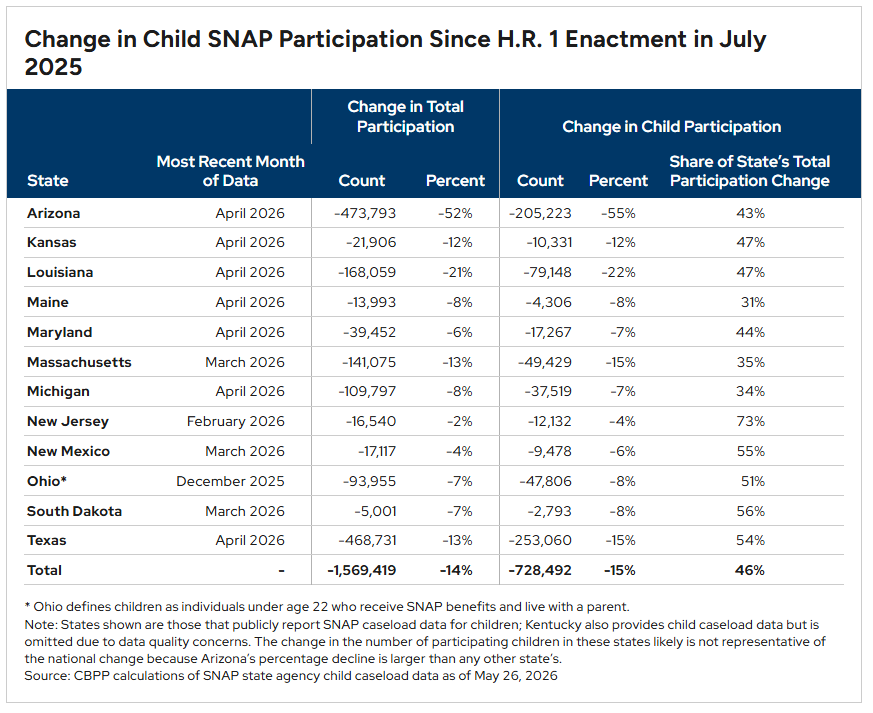
More than 3.5 million people have lost access to SNAP since the passage of last summer’s One Big Beautiful Bill Act.
That is the part that should stop the conversation from getting cute.
The administration line is that this decline shows the economy is improving, wages are rising, and fraud is being cleaned out of the system. Nice story. Very tidy. Also very convenient if your goal is to cut food aid and make it sound like a victory parade.
The problem is that the details do not really back that up.
SNAP, still called food stamps by most normal people, is supposed to shrink when the economy gets better. That part is true. If fewer people need help buying groceries because paychecks are rising and prices are manageable, good. Nobody should be mad about that.
But that is not what this looks like.
Benefits keep dropping and people are going to starve.
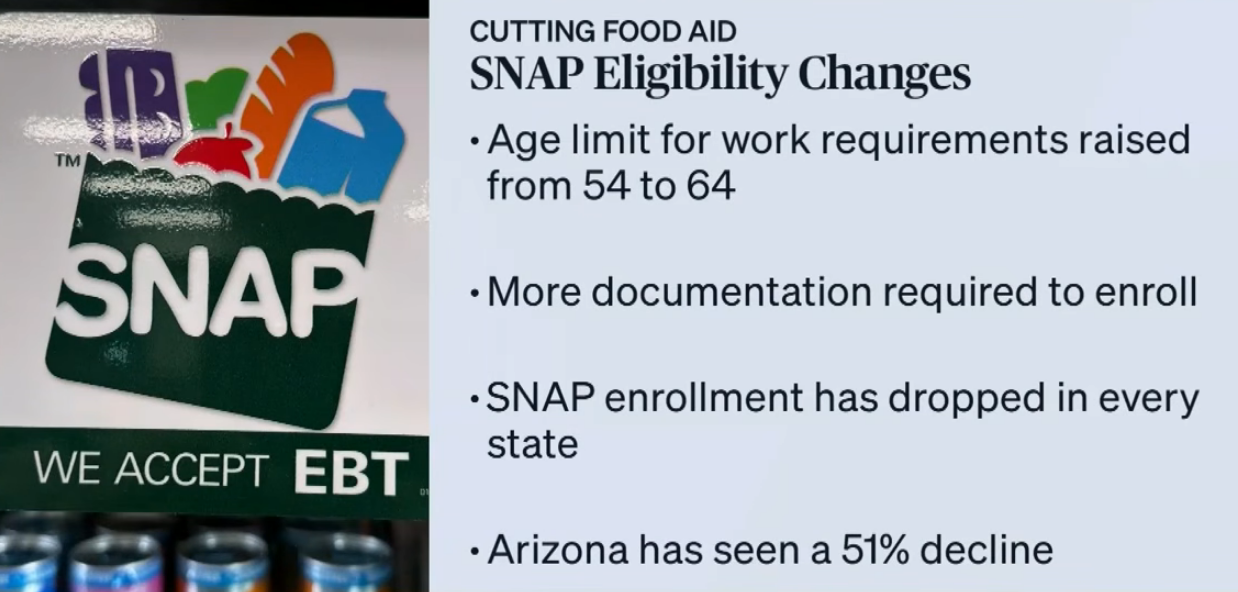
The law is projected to cut roughly $186 billion from SNAP over the next decade. It also raised the age limit for work requirements from 54 to 64, tightened eligibility, and forced more people to prove work hours and living conditions through heavier documentation. That means more forms, more deadlines, more recertifications, more chances for a person to get knocked off benefits even if they still qualify.
That is not prosperity. That is a paperwork trap.
 David Caltabiano
 SilverWars
Arizona is the flashing red light here. SNAP participation there has reportedly fallen by about 51%, the steepest drop in the country. Did Arizona suddenly become a low-income miracle economy in a few months? Did hundreds of thousands of people wake up, get raises, beat inflation, and stop needing groceries?
Come on.
The more believable explanation is uglier and much more boring. People are getting lost in the process. They are being asked to produce more documents. State offices are understaffed. Applications and recertifications have deadlines. If the paperwork is not processed in time, people can fall off the program and have to start over.
That is how you cut benefits without saying “we cut benefits.”
PBS interviewed Presley Nacise, a 27-year-old SNAP recipient with a chronic illness who works two jobs. He said he went from a little over $200 a month in grocery help to nothing for three months, then was recertified at $50 a month. He described eating less, losing weight, saving free snacks from work, and stretching meals because the benefit disappeared.
This is the kind of person who gets erased when politicians talk about “dependency” from a podium.
 Isabelle Kopp
The fraud argument is also doing a lot of work it has not earned. Harvard public health professor Sara Naomi Bleich told PBS that SNAP fraud is already low, around 1.6%, and that the new rules are more focused on payment error rates than fraud itself. That matters. A payment error can mean someone was overpaid or underpaid. It is not automatically some cartoon criminal buying steak with taxpayer money.
The defense will be that public money needs rules. Fine. Nobody serious thinks a federal benefit program should run on vibes. Eligibility should matter. Work rules should be clear. Fraud should be punished.
But there is a difference between stopping fraud and building an obstacle course poor people have to survive every month to eat.
That is the central scam here. Officials can point to falling enrollment and claim success. But if eligible people are losing benefits because the system became harder to use, that is not reform. That is administrative denial with better branding.
The victims are obvious. Low-income workers. Disabled people. Older adults pushed into new work-reporting rules. Parents juggling paperwork, shifts, rent, and grocery prices. People who did not stop being hungry. They just stopped being counted.
The winners are also obvious. Politicians get to brag about cuts. Budget writers get savings. Agencies get pressure to lower error rates. Everyone gets a cleaner spreadsheet.
Except the person eating one meal a day.
That is the sentence people should remember:
They did not end hunger. They made hunger harder to qualify for.